Psychological Support for Injury & Rehabilitation
The Injury Psychologist helps athletes and active individuals navigate the psychological side of injury, rehabilitation, pain and return to sport.
Dr Carl Bescoby PhD, MSc, BSc, CPsychol, HCPC
Chartered Practitioner Psychologist specialising in injury psychology, psychosocial rehabilitation and the psychological side of pain and recovery.
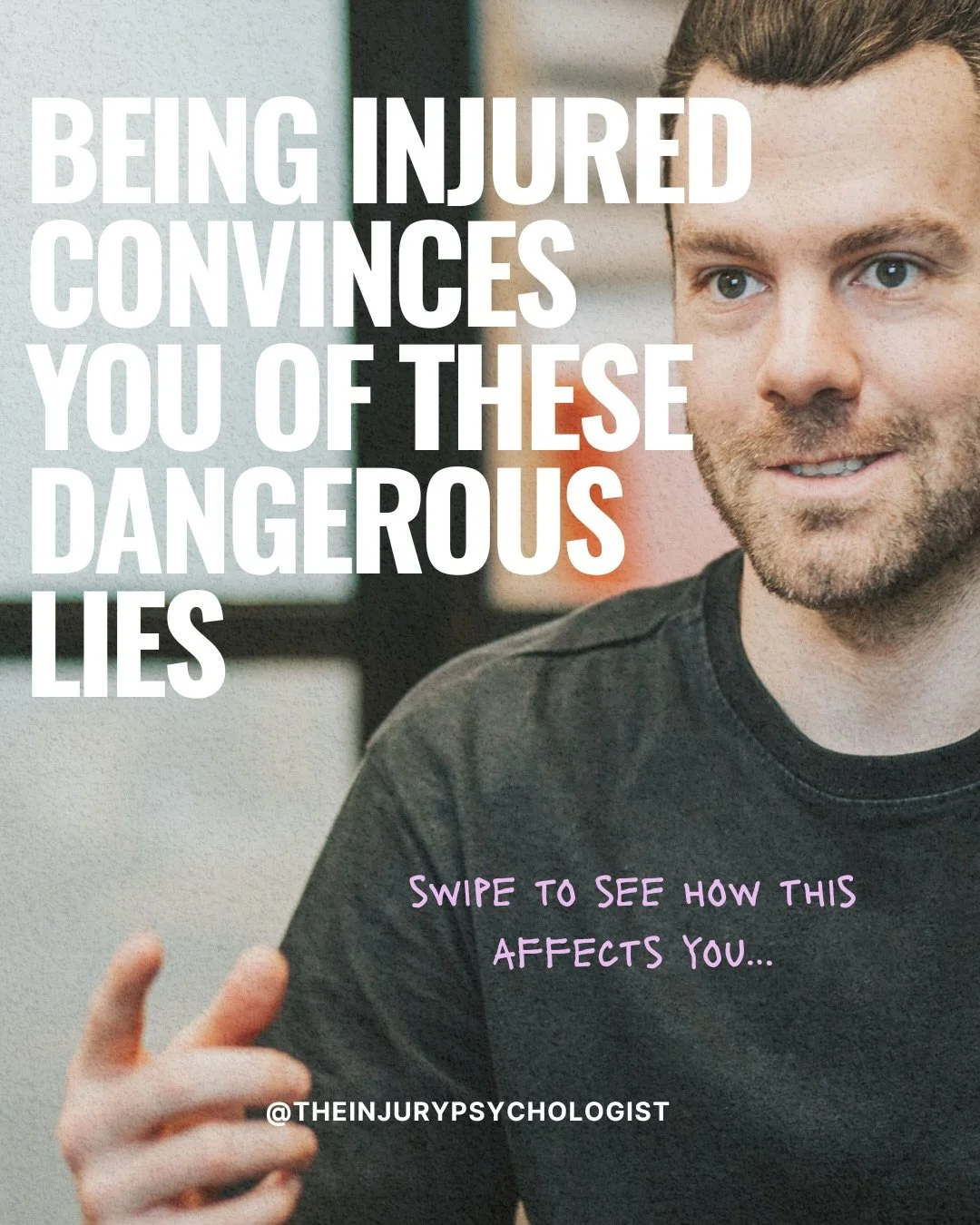
Recovery is more than physical.
My work focuses on the psychological side of recovery, helping people understand what's happening, respond differently to difficult moments, and move forward without waiting to feel completely certain or confident first.
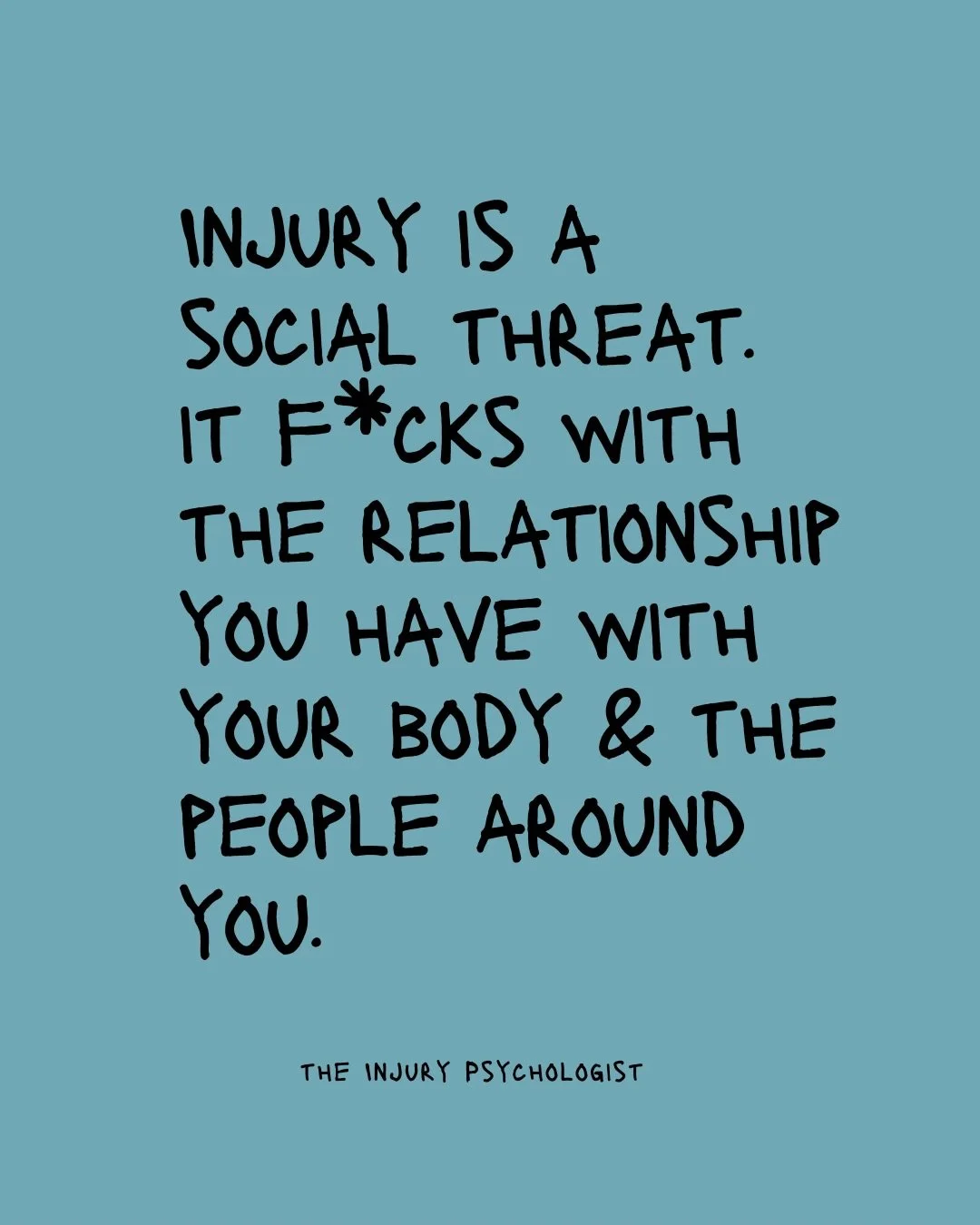
Injury can change much more than what your body can do. It can affect how you see yourself, what you believe you're capable of, your relationships, your confidence and how you imagine the future.
Helping people recover better by transforming how recovery is understood and supported.
Psychological Support for Individuals
Injury, pain, surgery and illness can affect far more than your physical health. They can disrupt confidence, identity, motivation, relationships and your sense of what comes next.
You might feel frustrated, anxious, stuck, disconnected from yourself, or unsure how to cope with a recovery that isn't going the way you expected.
Psychological support can help you navigate the emotional and psychological challenges of recovery, rebuild trust in yourself and your body, manage setbacks, work with difficult thoughts and feelings, and find a way forward that isn't defined by your injury.
You don't have to navigate recovery alone.
The psychological side of recovery
I help people navigate:
-
When frustration, anger, anxiety or low mood become part of recovery.
-
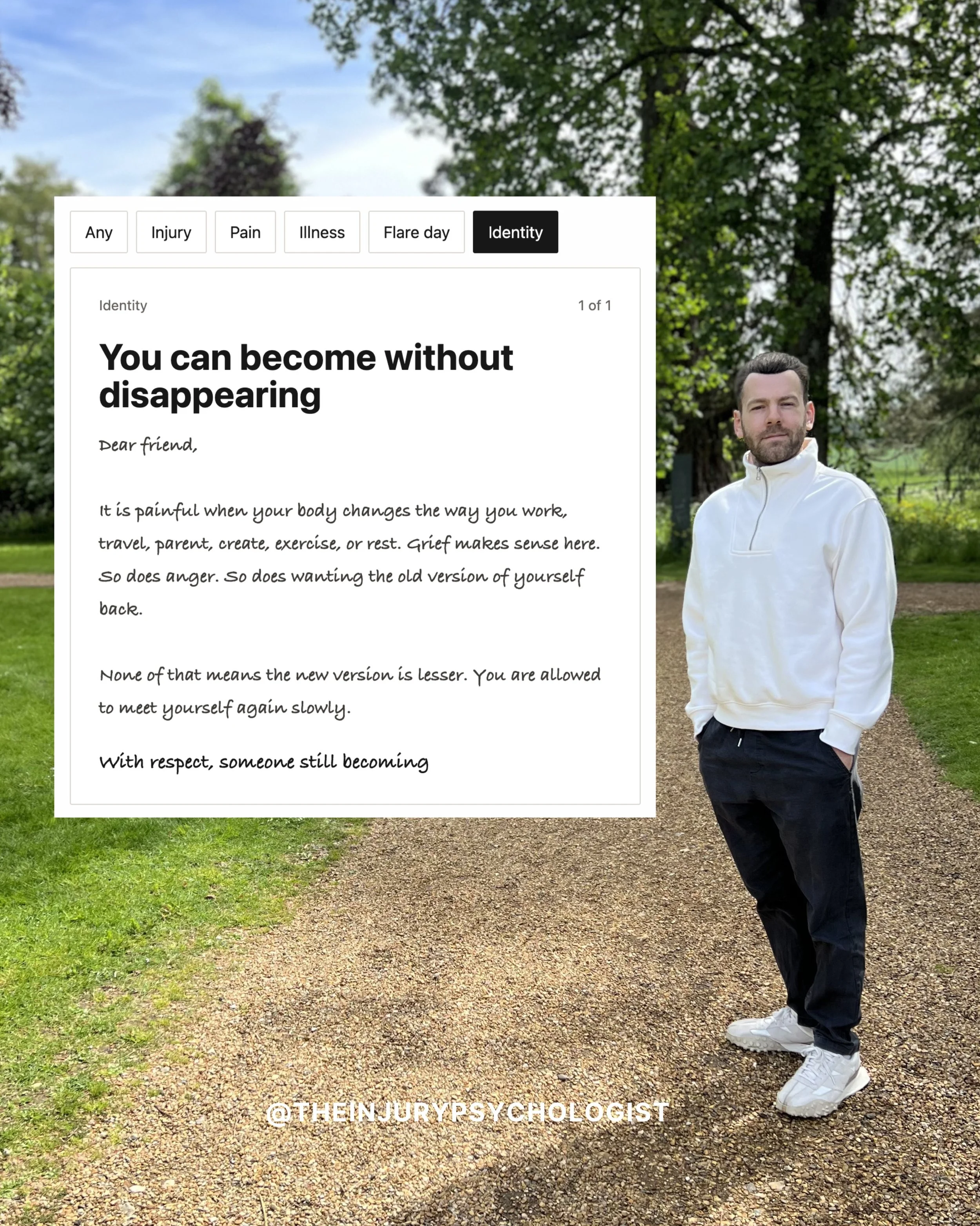
When being injured makes you question who you are without your sport, activity or previous abilities.
-
When your body may be ready to return but your mind doesn't quite trust it yet.
-
Rebuilding confidence in yourself and your body after injury.
-
Managing the difficult days when recovery doesn't feel linear.
-
Finding ways to live and move forward when pain or physical limitations persist.
-
Preparing psychologically for the transition back to training, competition and everyday activity.

Psychology in Rehabilitation
Psychological Support for Clinicians
Rehabilitation isn't only physical. The way clinicians communicate, respond to emotion, build relationships and create a sense of safety can influence how people engage with rehabilitation and experience recovery.
Through CPD training, practical tools and psychologically informed frameworks, I help physiotherapists and other rehabilitation professionals integrate psychological principles into everyday practice, without becoming psychologists.
Build stronger therapeutic relationships.
Support behaviour change.
Enhance recovery experiences.
Why The Injury Psychologist?
I'm Dr Carl Bescoby, a Chartered Practitioner Psychologist specialising in the psychological side of injury, rehabilitation and recovery.
I've spent more than 10 years working with injured athletes, active individuals and people living with pain and long-term health challenges. My background combines psychology practice, sport and exercise psychology, psychosocial rehabilitation research and clinical work within NHS pain services.
My approach draws on psychological approaches including Acceptance and Commitment Therapy and Compassion Focused Therapy, alongside solution-focused and rehabilitation psychology principles.
Psychologist. Practitioner. Educator.

Tools for the psychological side of recovery
Recovery can be difficult to navigate on your own. I've created practical resources to help you understand what's happening psychologically and develop skills you can use throughout recovery.

Steady Your Mind. Strengthen Your Comeback.
When the body is healing, the mind often drifts into doubt. Confidence can drop and motivation fluctuates. The fear of another setback begins to impact every decision.
This workbook offers a clear pathway through the psychological challenges of recovery so you can rebuild trust in your body and return to sport with confidence.
What this workbook helps you do
✔️ Stay committed to rehab even when progress feels unpredictable.
✔️ Reduce fear of re-injury so you can move with greater ease.
✔️Rebuild athletic identity after time away from training.
✔️ Develop a resilient mindset for your comeback
Inside the Workbook
A structured, evidence-based guide created by a specialist in sports-injury psychology:
📘 Educational chapters that explain the mental side of rehab in clear, approachable language.
🧭 Guided reflection and journaling to help you track progress, understand your fears, and redefine confidence in meaningful ways.
🎯 Motivation and adherence tools rooted in behaviour change science—practical strategies for staying engaged through setbacks.
💪 Return-to-sport psychological preparation to support the transition from rehab to full performance.
This is not a passive read, it is an active companion for the entire rehabilitation journey.
Who It’s For
Primarily for injured athletes navigating the mental side of recovery. Also used by physiotherapists, coaches, sport psychologists and clinicians supporting athletes through rehab and return to play.
Why Athletes Trust This Workbook
✅ Created by a specialist in the psychology of sports injury and rehabilitation.
✅ A Self-Help Guide for Injury Recovery that combines education, mindset training & journaling.
✅ Proven to Improve Rehab Adherence and helps athletes stay motivated & engaged.
✅ Practical & Easy to Follow with structured exercises even for difficult days.
Real Words From Athletes
⭐️⭐️⭐️⭐️⭐️ “This workbook transformed my recovery! I went from feeling stuck to regaining confidence in my return to sport.” – Sarah, Runner
⭐️⭐️⭐️⭐️⭐️ “As a dancer, my body is my livelihood and identity. After an injury, I felt lost. This workbook gave me the mental tools to stay positive and build my identity beyond dance” – Emily, Professional Dancer
⭐️⭐️⭐️⭐️⭐️ “Coming back from injury at the elite level is just as much mental as it is physical. This workbook helped me rebuild my confidence after ACL surgery and get back to competing at my best.” – James, Professional Fighter
Begin your recovery with greater clarity and confidence
🛒 Price: £28.99
🚚 Fast UK & International Shipping | 💳 Secure Checkout
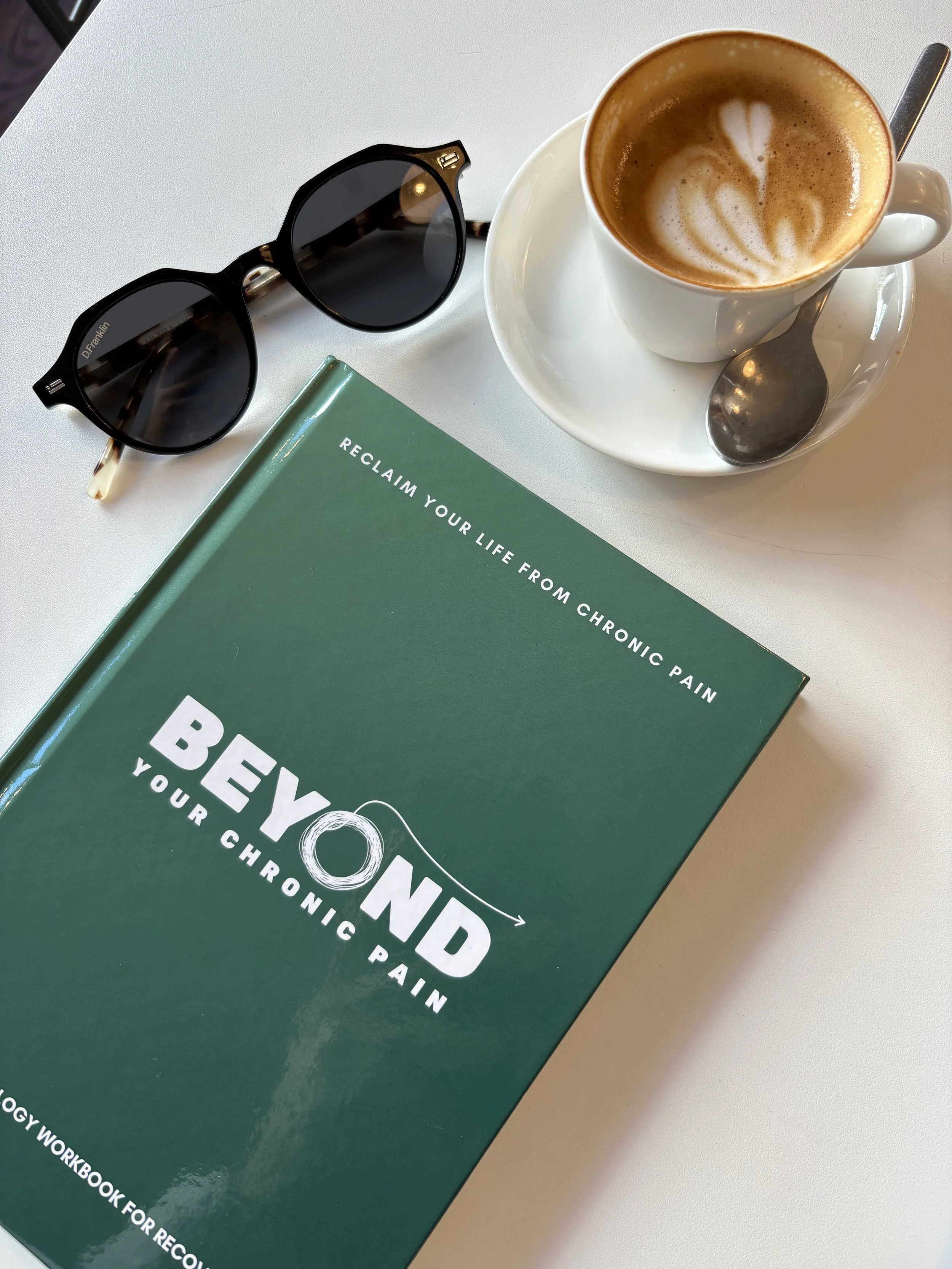
Understand Your Pain. Reclaim Your Life. Live with Meaning.
Chronic pain can challenge not only the body but also your sense of self, purpose, and hope. The Beyond Your Pain Psychological Workbook offers evidence-based strategies to help you navigate the emotional and psychological impact of ongoing pain so you can move beyond struggle and reconnect with what truly matters to you.
Grounded in the latest pain science and compassionate psychological approaches, this workbook helps you understand your pain, build resilience, and create a life that feels rich and meaningful even when pain is present.
✔️ Learn how pain works – understand the brain–body connection
✔️ Manage the emotional ups and downs of living with pain
✔️ Break the boom-and-bust cycle and develop a sustainable rhythm
✔️ Approach flare-ups with self-compassion and flexibility
✔️ Reconnect with your values and sense of purpose
What’s Inside?
📖 Educational Insights & Guided Reflections – Learn the psychology and neuroscience of pain in clear, relatable language.
📝 Journaling Prompts & Self-Reflection Exercises – Explore your experiences, emotions, and coping patterns.
💡 Practical Tools for Daily Living – Manage activity levels, respond wisely to flare-ups, and balance rest with movement.
💬 Compassion-Focused Practices – Soften self-criticism and cultivate a kind, accepting relationship with your body.
🎯 Values & Meaning-Based Exercises – Identify what truly matters and build a life beyond pain.
Perfect for: Individuals living with persistent pain, healthcare professionals supporting others, and anyone seeking psychological tools for pain management and wellbeing.
Why This Workbook?
✅ Expert-Designed – Created by a psychologist specialising in the mental side of injury, pain, and rehabilitation.
✅ Evidence-Based & Compassion-Informed – Draws on Acceptance and Commitment Therapy, Compassion-Focused Therapy, and pain neuroscience education.
✅ Empowering & Practical – Transform knowledge into action through reflection and small, meaningful steps.
✅ Sustainable Change – Move from fighting your pain to living fully beyond it.
🌍 Trusted by individuals, clinicians, and rehab professionals worldwide
⭐️⭐️⭐️⭐️⭐️ “This workbook changed how I see my pain. It helped me stop blaming my body and start living again.” – Alex, Artist
⭐️⭐️⭐️⭐️⭐️ “Beyond Your Pain gave me practical tools to handle flare-ups and the emotional rollercoaster of chronic pain.” – Maria, Physiotherapist
⭐️⭐️⭐️⭐️⭐️ “I finally feel like I understand my pain rather than fear it. This book helped me find calm, compassion, and purpose again.” – Rob, Runner
Order now & begin your journey Beyond Pain
🛒 Price: £28.99
🚚 Fast UK & International Shipping | 💳 Secure Checkout








Frequently Asked Questions
-
An injury psychologist supports the psychological side of injury, rehabilitation and recovery. Injury can affect much more than your physical abilities, it can change your confidence, identity, motivation, relationships, mood and sense of the future.
Psychological support can help you understand and navigate these changes, manage difficult thoughts and emotions, rebuild confidence and self-trust, cope with setbacks, and develop ways of responding that support your recovery.
You don't need to be struggling with a mental health diagnosis to benefit from psychological support. Sometimes you simply need space to make sense of what has happened and work out how you want to move forward.
-
Injury can disrupt many of the things that help us feel like ourselves. Sport or physical activity might provide structure, purpose, connection, confidence and a sense of identity. When injury takes these things away, sometimes suddenly, it can create a significant psychological impact.
You may experience anxiety, frustration, anger, sadness, isolation, loss of confidence or uncertainty about the future. These responses don't mean you're failing to cope. They are understandable responses to a significant change in your life.
-
Yes. Psychological difficulties are a common part of the injury and rehabilitation experience, although everyone's response is different.
You might feel relatively positive one day and overwhelmed the next. You might feel fine physically but struggle emotionally. You might become frustrated with how long recovery is taking, worry about whether you'll ever get back to where you were, or feel disconnected from the person you were before your injury.
Recovery isn't always a straight line. Struggling at times doesn't mean you're going backwards.
-
Yes. Fear of re-injury can remain even when your physical rehabilitation is progressing well.
You may know intellectually that your body is ready, while another part of you still feels unsure about trusting it. Psychological support can help you understand the fear, notice how it influences your thoughts and behaviour, rebuild confidence and gradually develop a different relationship with uncertainty.
The goal isn't necessarily to eliminate fear before you return. Sometimes it's about learning that you can move forward while fear is still there.
-
For many athletes and active people, their sport or physical activity is more than something they do. It can be an important part of who they are.
Injury can suddenly interrupt that role and leave you asking questions such as, Who am I if I can't do this? What am I working towards now? Where do I fit?
This can create a genuine sense of loss. Psychological support can help you explore what your activity has given you, understand what has been disrupted and begin developing a broader sense of yourself that isn't entirely dependent on what your body can currently do.
-
Psychological support can be helpful for people living with persistent or chronic pain.
This doesn't mean that the pain is imagined or that psychology is being used to suggest that pain is 'all in your head'. Pain is real, complex and influenced by a range of biological, psychological and social factors.
Psychological support can help you understand your relationship with pain, respond differently to difficult thoughts and emotions, manage the impact pain has on your life, and find ways to move towards the things that matter to you even when pain is present.
-
You don't have to wait until things become overwhelming.
Psychological support can be useful at different points in recovery, shortly after an injury, during a long rehabilitation, when progress stalls, when confidence drops, before returning to sport, or when you're struggling to adjust to changes in your life.
You might consider seeking support if you're feeling stuck, increasingly anxious or low, losing confidence, struggling with motivation, finding setbacks particularly difficult, or feeling that the psychological side of recovery is becoming harder to manage on your own.
Sometimes getting support earlier simply gives you more space to work with what is happening before it becomes more difficult.
-
Yes. I work with athletes and active individuals across different sports and levels of participation, as well as people whose identity or wellbeing is closely connected to movement, exercise or physical activity.
I also support people navigating injury, pain, surgery, illness and significant changes to their physical capabilities.
You don't need to be a professional athlete or competing at an elite level. If being injured has affected your life, your confidence, your identity or your sense of what comes next, psychological support may be relevant to you.
-
Yes. 1:1 psychological support is available online, allowing you to access support wherever you are.
Online sessions can be particularly useful when you're already managing appointments, rehabilitation and the practical demands of recovery. Sessions provide a confidential space to talk through what is happening psychologically and work together on practical ways forward.
If you're unsure whether psychological support is right for you, you can start with a Recovery Consultation to explore what you're experiencing and what support might be helpful.
You don't have to figure out the psychological side of recovery on your own.
If injury, pain or rehabilitation is affecting how you think, feel or see yourself, psychological support can give you space to understand what's happening and work out your next step.